
Technical SEO
JavaScript SEO: Ensuring Crawlers See Your Content
Client-side rendering creates invisible content for crawlers that don't execute JavaScript reliably. Learn when SSR, SSG, and dynamic rendering are worth the investment.
By SEOConsultants.ai Team, SEO & AI Search Consultants · Updated 2026-05-15
The JavaScript Indexation Problem
Modern marketing sites and SaaS products frequently render content client-side using React, Vue, Angular, or similar frameworks. Googlebot executes JavaScript, but with limitations: crawl budget, rendering queue delays, and incomplete execution of complex apps mean content visible to users may not appear in Google's index. Other crawlers, including some AI retrieval bots, may not execute JavaScript at all. If your value proposition, pricing, or documentation loads only after JS execution, you may be invisible to a significant portion of search and AI discovery.
How Googlebot Processes JavaScript
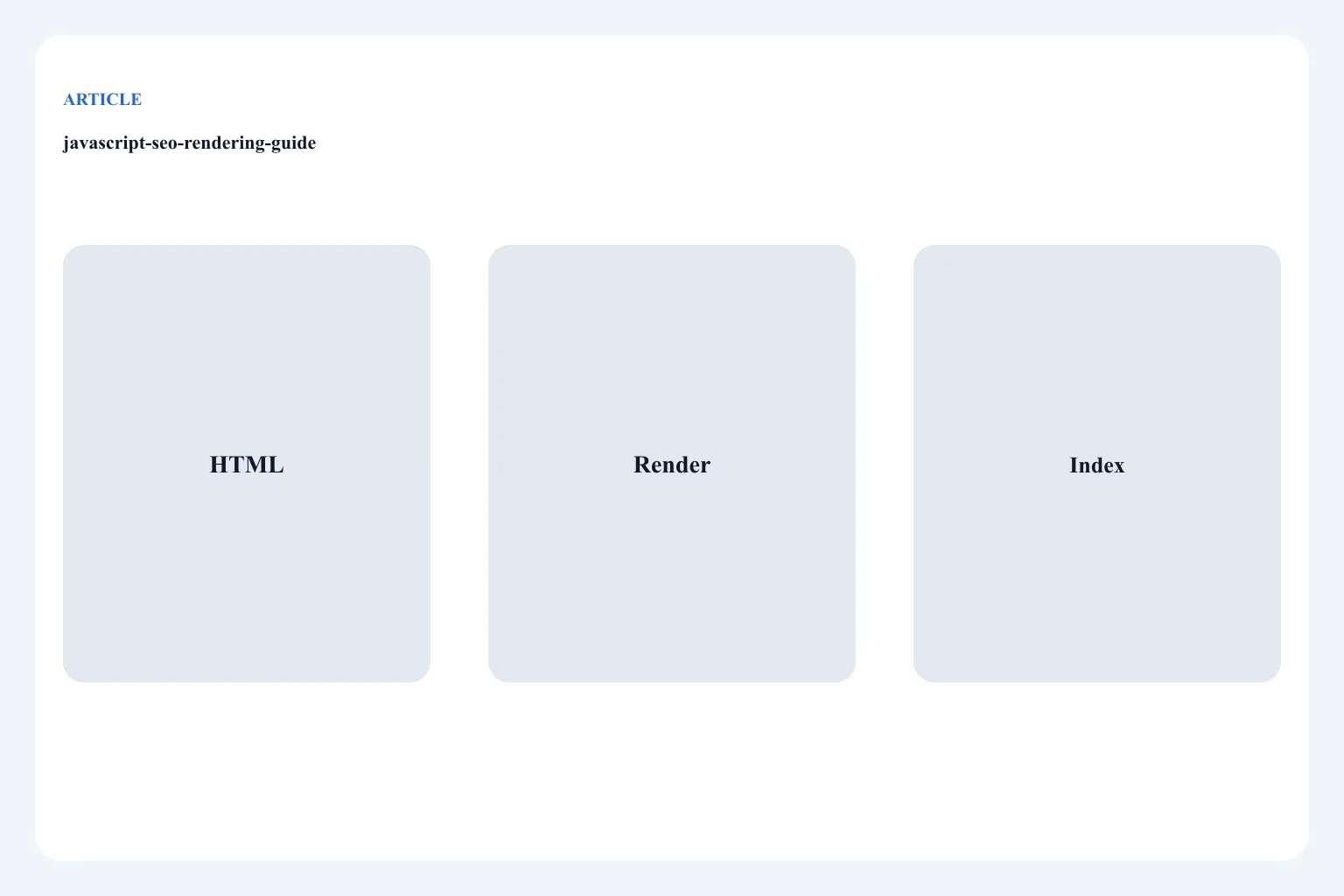
Googlebot crawls HTML first, then queues pages for rendering in a headless Chrome environment, a process that can take hours or days for large sites. During this window, Google may index incomplete content. Critical SEO elements, title tags, meta descriptions, canonical links, and internal links injected via JavaScript, may be missed if rendering fails or times out. Search Console's URL Inspection tool shows both crawled and rendered HTML; discrepancies between them signal JavaScript SEO risk.
Rendering Strategy Options
Server-side rendering (SSR) generates full HTML on each request, ideal for dynamic, personalized content that must be fresh. Static site generation (SSG) pre-renders at build time, excellent for marketing pages and documentation with predictable content. Incremental static regeneration (ISR) blends both for large sites. Dynamic rendering serves pre-rendered HTML to bots and client-side JS to users, a pragmatic legacy approach, though Google prefers consistent serving. Hydration-aware frameworks (Next.js, Nuxt, Astro) make SSR/SSG accessible without abandoning component architectures.
Testing and Validation
Compare view-source (initial HTML) against rendered DOM in DevTools. Use Google's Rich Results Test and Mobile-Friendly Test for rendered output. Fetch as Googlebot via Search Console. For AI visibility, test whether plain HTTP fetches (curl without JS) return meaningful content, the same content AI crawlers may see. Audit internal links: if navigation renders client-side, crawlers may not discover deep pages. Implement XML sitemaps with lastmod dates to prompt recrawling after JS fixes deploy.
Pragmatic Recommendations by Site Type
Marketing sites: prefer SSG or SSR for all indexable pages; reserve client-only rendering for authenticated app areas. SaaS documentation: SSG with search-friendly URLs; avoid hash-based routing for indexable content. Ecommerce: SSR/SSG for category and product pages; ensure price and availability appear in initial HTML. Enterprise portals with legacy SPAs: consider dynamic rendering as interim fix while planning SSR migration. The investment in proper rendering pays dividends across Google, Bing, and AI retrieval systems.
What this article is not
This is a rendering/indexation how-to. It is not SaaS SEO page-type delivery or ecommerce catalog SEO. Those engines decide which templates exist; this article asks whether crawlers can see them.
Related services Technical SEOSaaS SEOEcommerce SEO