
Object
Counterpart: GTIN/title recipes · PMax asset counts · facet index rules.
This page: Sequence of paid families for this catalog this season.
Store paid operating system
Ecommerce PPC is the store’s paid operating system: which format is primary this season, what stock and margin switch off, and what stays a Shopping or PMax child treatise. Catalog indexation stays on ecommerce SEO.
Related page: PPC program.
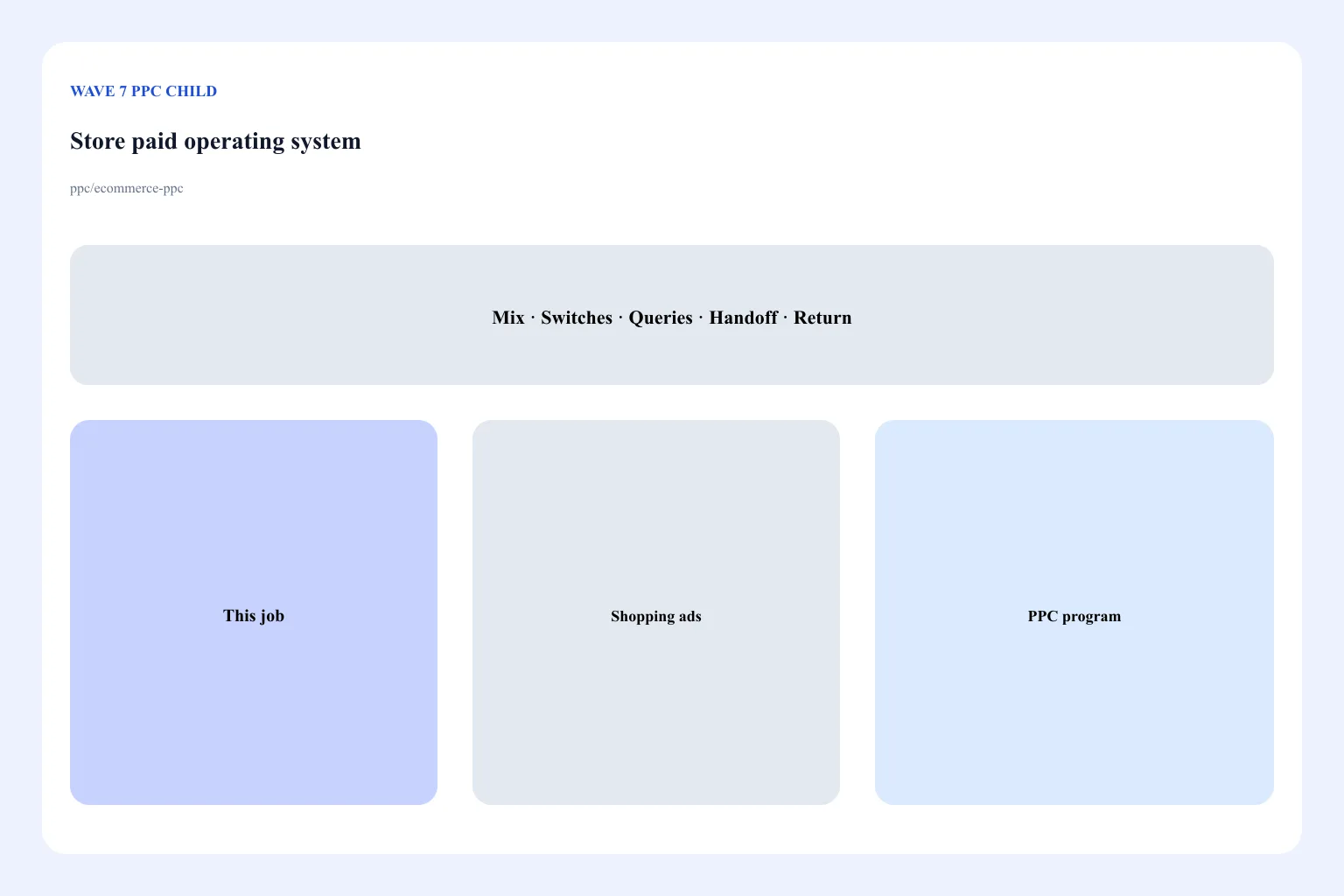
Delivery sequence
Which of Shopping, PMax, Search, remarketing is primary this season.
Pause, exclude, or promo from stock and margin — program layer.
Brand, category, shipping versus PLA queries.
Feed fields to Shopping. Facets to ecommerce SEO.
Lists included as a family; construction stays on remarketing.
Order of families. Stock and margin switches. Not Merchant recipes. Not Amazon as H1.
Journey map only. No rankings, traffic, or results claims.
Split
Shopping ads own Merchant eligibility and PLA titles as ad fields. Performance Max owns asset groups and reporting limits. Ecommerce SEO owns catalog indexation and facets. This page owns the **store mix** and stock/margin switches.
Counterpart: GTIN/title recipes · PMax asset counts · facet index rules.
This page: Sequence of paid families for this catalog this season.
Counterpart: Disapprovals · brand exclusions · crawl policy.
This page: Mix → stock/margin switches → query classes → child handoffs → return family.
Counterpart: Shopping ads · Performance Max · ecommerce SEO
This page: This ecommerce PPC URL.
Mix
Ecommerce PPC is the catalog’s paid operating system. Children own format depth. This URL names the order and what is off.
A season can put Shopping first when query-level product control is required, PMax first when the catalog is eligible and reporting limits are accepted, or Search first for brand and non-product intent. The choice is this OS.
Microsoft catalog paid, if the hub included the network, still follows this mix. Merchant-on-Microsoft eligibility stays on Microsoft Ads.
We will not print a ROAS target or spend floor as a product.
Switches
Out of stock, low margin, or promo windows pause, exclude, or boost at the program layer here. Custom labels as feed *fields* remain Shopping ads. This page decides when those labels change the mix.
New versus returning customers can be a configurable goal. We will not invent an LTV percentage.
Amazon Ads and marketplace sponsored products are not this H1. This mix is Google/Microsoft paid for *your* store URLs.
Queries
Shipping, returns, brand, and category intent often belong in Search format — owned in depth on search ads, sequenced here. PLA queries stay with Shopping inventory.
Paying for a thin faceted URL is a mix mistake we refuse. Facet and product-URL policy stay on ecommerce SEO. Frozen Shopify SEO is not reopened.
Return
Return families can sit after product capture. List construction is remarketing. This OS only says whether lists are in the season’s mix.
Dynamic return versus new-query PLAs must stay split so reporting is honest.
Field notes
Primary format this quarter is a written choice, not “run everything.”
Promo calendars switch bids and exclusions here; they do not rewrite Merchant title character recipes.
Brand Search defense for the store is sequenced here; brand campaign containers in Google sit on Google Ads.
We will not treat PMax as a silent replacement for the whole mix.
Feed-only PMax can be a mix option. Listing-group filters still do not steal the Shopping eligibility treatise.
International catalog language and currency bleed is international PPC, not this H1.
We will not manage Amazon Ads on this URL.
Bundle and kit SKUs are mix decisions (include, exclude, dedicated). Item-group feed structure stays Shopping.
Free listings can share a feed. Indexation of those URLs remains ecommerce SEO.
Margin tiers can suppress SKUs in paid without changing organic crawl rules.
We will not invent AOV or conversion-rate floors.
Landing experiments on product URLs are landing-page CRO if named. This OS does not assume CRO is bundled.
B2B wholesale catalogs with login walls are a different conversation; committee pipeline is B2B PPC, not a storefront mix reprint.
PPC management operates the mix after it exists; this page is the OS, not the weekly cadence philosophy.
Hub coverage still decides whether ecommerce paid is in the program at all.
We will not reprint `/seo/ecommerce-seo/` facet tables.
Depth
store paid mix is the object of this page: which Room B families a catalog uses, in what order, and which inventory or margin facts pause them. It is not Merchant title character recipes. It is not PMax video counts. A store needs a sequence, not a single campaign type pretending to be the whole program.
Shopping versus Performance Max versus Search versus remarketing, for this catalog, is the store paid mix decision. Shopping ads keep PLA Merchant eligibility. Performance Max keeps asset groups. This URL chooses whether those families are on, off, or seasonal for the shop, then stops before reprinting their spines.
Margin, stock, and season are switches in the store paid mix. A SKU that cannot fulfill should not keep buying clicks. A promo week can elevate a family; a stockout should exclude it. Those are program choices. They are not feed attribute essays and not a promised LTV.
Non-product queries — shipping, brand, category, “near me” store-locator junk — sit in the store paid mix beside PLA queries. Text search may cover what a listing ad cannot. That is sequencing, not RSA pinning depth. Query-auction operations remain on search ads; we only say whether the store buys that family.
Feed hygiene versus URL policy is a handoff inside the store paid mix. Titles and GTINs as ad fields belong to Shopping. Faceted indexation and product URL rules belong to ecommerce SEO. This page will not steal either treatise. It will insist the mix does not fight the HTML the feed points at.
New versus returning customers can be a configured goal in the store paid mix, not a promised lifetime value. If the shop cannot tell those cohorts apart, we do not enable the goal. Remarketing lists that serve returning browsers are a child door, not a reprint of membership duration.
Amazon Ads are not this H1. The store paid mix on this site is Google-and-Microsoft families the architecture named. A marketplace media plan is a different conversation. We refuse to become an Amazon operating system in a paragraph that was supposed to sequence Shopping and Search.
Shopify themes and platform SEO are not the store paid mix. Theme work does not choose PMax versus Standard Shopping. If the cart cannot load, that is a landing or technical handoff. Paid sequence still starts from catalog economics: what you can sell, what you can ship, which family can advertise it.
Brand defense for a retailer is a slot in the store paid mix, not a Quality Score column. If the hub included brand, the shop still decides whether brand Search sits beside Shopping. Implementation of match types is search ads. The mix only records that brand is a family in the sequence.
Category versus SKU emphasis is a store paid mix lever when margin concentrates in a few products. That is not custom-label recipes as Shopping ad objects, though labels may execute the split. We describe the program choice — push SKUs, suppress loss leaders — and send field-level feed work to Shopping.
Remarketing’s place in the store paid mix is usually after product discovery families, because lists need site events. We will not write list definitions here. We will say whether return traffic is in the sequence for this catalog and when it is paused (out of stock, end of season).
International catalogs still use a store paid mix per market only after geo-currency-consent is structurally possible. That structure is the international child. This page does not become hreflang. It may say a market is out of the mix until Merchant and ads consent can support it.
App store user acquisition and ASEO are refused. The store paid mix is web catalog paid search and its sibling families, not listing optimization in an app store. One refusal is enough. Do not open ASEO children from this URL as if they were Shopping.
Reporting for the store paid mix should not blend families into one vanity ROAS. Shopping, PMax, Search, and lists tell different stories. We read them as a sequence: what the catalog needed this week, which family was on, which SKUs were excluded. Invented blended return is out.
Greenfield stores still start coverage on the PPC hub; this page is the catalog sequence once a shop is the buyer. We will not rebuild the ecosystem map. We will order the families the store paid mix is allowed to use. Account diagnostics of an already-spending shop sit on the audit child.
An ordered store paid mix is the catalog deliverable: families, margin switches, stock pauses. Spend floors, ROAS, CPC, and conversion quotas stay unpublished. Sibling treatises remain on their URLs so this page cannot be copied as a Shopping or PMax reprint of field recipes and asset counts.
Gift-card, wholesale, and B2B catalog slices inside a store paid mix are separate sequences if they cannot share margin or fulfillment. They are not a new URL. This OS can pause a slice without rewriting Merchant titles. If wholesale is actually committee demand, that buyer is B2B PPC, not a PLA recipe.
A store paid mix that cannot name a primary family this month has not finished. “All campaign types on” is the hub’s refusal, applied to a catalog. We pick a primary, park the rest, and leave PMax asset-group counts and Shopping GTIN diagnostics on their children.
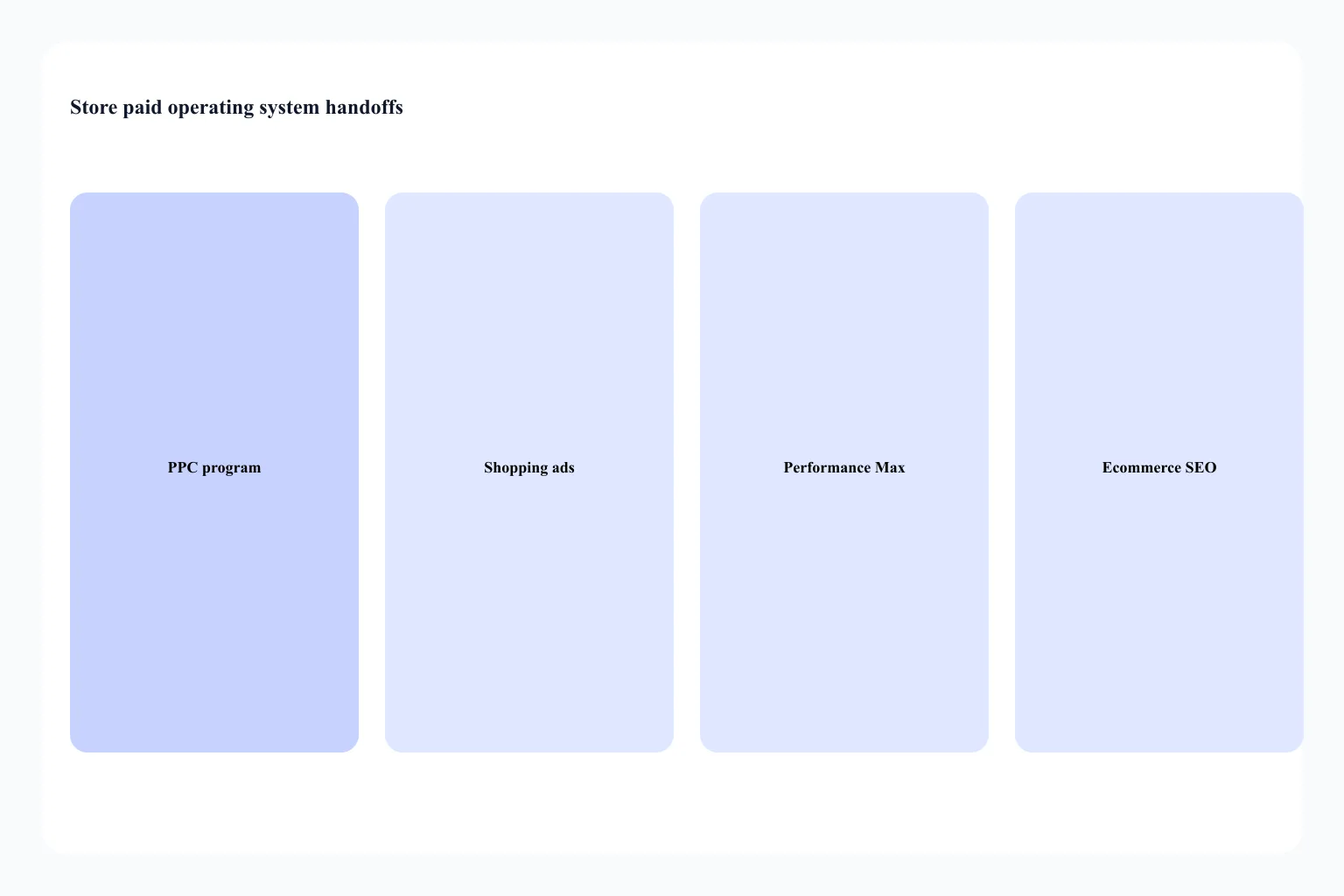
Sequence
Shopping, PMax, Search, or a stated split.
Pause, exclude, promo — program layer.
Hand format depth to children.
Lists built on remarketing, not here.
Not this URL
PLA fields and GTINs stay on Shopping ads.
Indexation and crawl policy stay on /seo/ecommerce-seo/.
Marketplace ads are not this page.
Asset groups and reporting limits stay on Performance Max.
Explore
Questions
This page. Shopping and PMax children own depth of those formats. This OS names the order.
Pause, exclude, or promo at the program layer here. Feed field recipes stay on /ppc/shopping-ads/.
No. This H1 is Google/Microsoft catalog paid mix on your site. Marketplace ads are not this page.
Titles as PLA fields are Shopping ads. Mix and seasonality are this page.
Indexation and facet rules are /seo/ecommerce-seo/. Paying for a thin facet URL is a mix mistake we refuse here.
As a return family this OS can include. List construction is /ppc/remarketing/.
Shopify SEO is a frozen engine. This page sequences paid formats for a catalog, platform-agnostic.
Ecommerce PPC
Ecommerce PPC for Shopping, PMax, Search, and remarketing. Margin-aware bidding, feed optimization, and full-funnel paid strategy.
Ecommerce PPC must name
Ecommerce PPC next. Not a generic visibility score.